The best time for a Kemi icebreaker cruise
The ships only sail while the sea is frozen, so the calendar belongs to the ice. That gives you a window of a few months, each with its own light and cold and its own crowds. Pick your weeks with the walk on the ice in mind, and leave a spare day.
The frozen sea sets the calendar
The best time for an icebreaker cruise in Kemi is when the ice is thick, because the cruises run only while the sea is frozen. In most winters that means a window from late December or January into April. The first and last sailings move with the ice from one year to the next.
The Bothnian Bay forms the northern tip of the Gulf of Bothnia, and its brackish water holds far less salt than the open ocean. That is why it freezes over in most winters, with ice that can grow past half a meter thick in a cold year.
No operator fixes its dates far ahead. Open the calendar on the listing for the days you want, because a date that shows as bookable is the clearest sign that a ship plans to sail.
The first and last cruises shift every winter with the ice. Check the listing calendar before you buy flights or book a hotel. Look again a week or two before you travel.
The first weeks, when the ice is young
Early in the winter the ice can be thick enough to slow a ship yet too thin to stand on. According to the Sampo listing, the ice walk may be off in those first weeks.
Across the border, Polar Explorer gives no ice guarantee before early January. A December booking is a bet on the weather, and our guide to thin ice and strong wind explains what happens when that bet goes the wrong way.
January brings low sun and deep cold
Kemi lies just south of the Arctic Circle, so it never gets the full polar night. In January the sun does rise for a few hours around noon, though it stays low.
These are usually the coldest weeks. Temperatures below −10 °C (14 °F) are common, and on the open ice the wind makes it feel sharper, so pack with our notes on what to wear on the frozen sea beside you.
The reward is a calmer feel than the late-winter rush. The long twilight on either side of the short day turns the ice blue and pink, and the low sun throws long shadows across the broken channel.
February and March, the best time for walking on the ice
By February the days lengthen quickly and the ice is usually thick, which improves the odds of walking on it and floating in the channel. Neither is ever promised, because each cruise still answers to the conditions it meets.
These are also the busiest weeks of the winter. Popular departures can fill, so book once your dates are fixed and lean on the free cancellation window where the listing offers one.
The light is the other draw. On the afternoon cruise the sun often hangs low over the ice, and one reviewer watched the sunset from Sampo late in March. Clear skies are down to luck, which no ship can arrange.
April glare and the last sailings
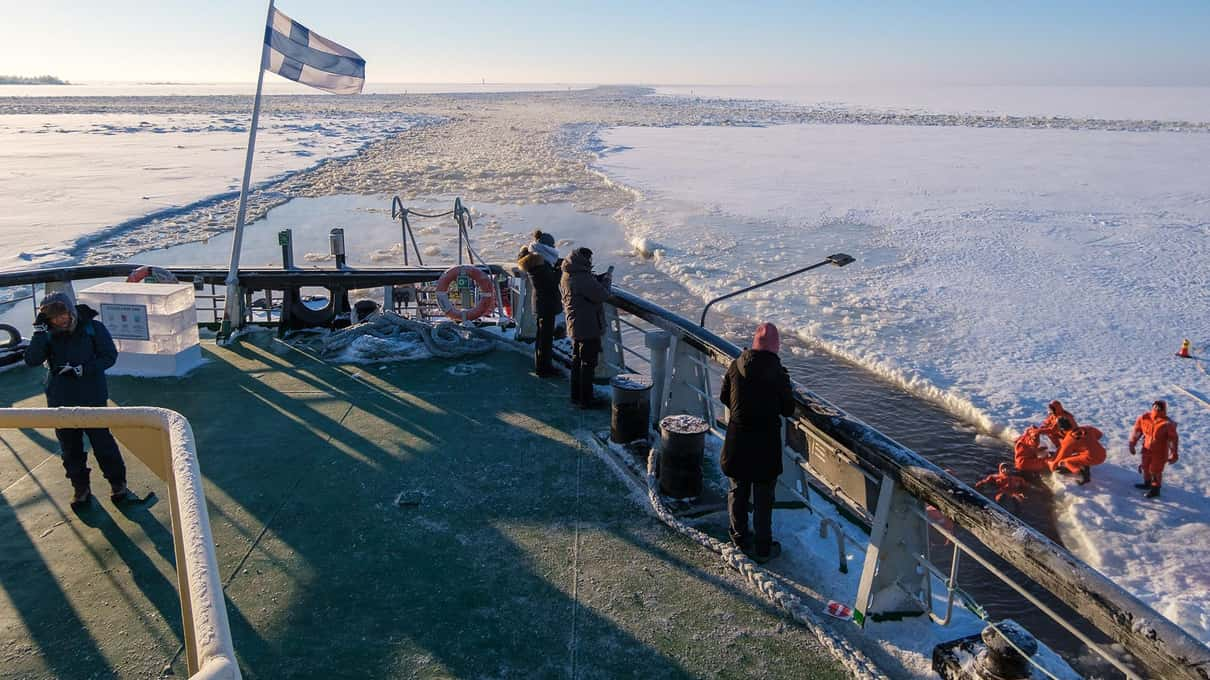
April brings long bright days and strong sun off the snow. One listing advises sunglasses, especially in spring. On a white sea under a clear sky they help more than you would expect.
This is the tail of the season. As the ice weakens, the last departures depend on how fast the thaw comes, so treat April dates as less certain than February ones and check the calendar again close to the trip.
Sampo in the morning or the afternoon
Sampo's afternoon cruise, from ~$451, starts at 1:30 pm and includes lunch on board. In midwinter it also catches the lowest, warmest light of the short day.
Sampo's morning cruise from 9 am has no meal included, so you either eat at the SnowCastle restaurant afterward or bring a snack. The full rhythm of both versions, from hotel pickup to drop-off, is in our guide to the rest of the day in Kemi.
Arktis from ~$344 also offers a morning or an afternoon departure, with meals as extras. How the ships differ beyond the timetable is set out in the three-ship comparison.
Polar Explorer across the season
Polar Explorer from Axelsvik, from ~$365 with the shuttle, sails from the Swedish side of the border. It holds 4.7 from 490+ reviews on GetYourGuide, more than any other icebreaker cruise in the area.
Its departures follow Swedish time, one hour behind Finland, which trips people up on a cross-border day. The drive and the shuttle options are covered in our Axelsvik guide.
A big ship for the deep of winter
Seven decks with an audio guide in 16 languages give you plenty to explore between the ice stops, and an 11-minute film plays in the onboard theatre. Children from 125 cm can float with their parents. From ~$365 with the shuttle on GetYourGuide.
The catch is the cancellation window. Free cancellation on GetYourGuide ends 45 days before the cruise, not 24 hours, so an early-January date booked in autumn is a firm commitment. Food is sold in the cafeteria rather than included.
Picking your week
Aim for February or March if walking on the ice and floating matter most, since the ice is usually at its thickest then. If you prefer low winter light and fewer people, January is the trade, with deeper cold to match.
How the float itself works, from the survival suit to the climb back out, is in our ice floating guide. The price side of each choice sits in what a Kemi icebreaker cruise costs.
Whatever the month, put the cruise early in your stay. A spare day lets you move the booking if the forecast turns, and the 24-hour free cancellation on the Icebreaking Company listings keeps that simple.