What to wear on the frozen Bothnian Bay
An icebreaker cruise from Kemi swings between a warm lounge and an open sea of ice, and your clothes have to cope with both. The listings only say warm clothing and warm shoes, which leaves a lot of room for getting it wrong. This guide goes from the skin out, then covers the survival suit and your phone.
How cold it gets out on the ice
Daytime in Kemi in winter often hovers around −10 °C (14 °F), and some days are far colder. Out on the frozen sea it feels sharper still, because nothing stops the wind across the flat ice.
Inside, the ships keep warm with heated lounges and cafés. So the aim is clothing you can open up indoors and close tight outside, not one huge coat you either boil or freeze in.
Late in the winter the sun returns in force. The light bouncing off snow and ice is bright enough that the Sampo listing tells guests to bring sunglasses, especially in spring.
While the ship is moving, the deck adds its own breeze to the wind off the ice. Standing at the bow to watch the hull crack the sea is the coldest place on board, and also the one everyone wants.
Layers, from the skin out
Think of three or four thin layers rather than one thick one. Air trapped between them holds the warmth, and you can peel one off in the lounge without ending up in a T-shirt.
- A wool base layer for top and bottom (cotton stays cold once it is damp)
- A fleece or thin wool sweater as the middle layer
- A down jacket or ski jacket for warmth
- A windproof shell over it if your jacket lets the wind through
- Ski trousers or lined winter trousers over the base layer
Jeans on their own are a poor choice for the open ice. If they are all you have, wear thermal leggings under them and keep the time on deck short.
From hat to boots
Wear a hat that covers your ears fully. Add a scarf or neck gaiter you can pull over your face in the wind. Most of the cold on deck reaches you through the face and neck.
Bring two pairs of gloves. Thin liners let you work a phone or camera, and thick mittens go on top for walking on the ice. A spare pair helps if one gets wet.
Feet matter most when the ship stops and you step down onto the sea. Warm winter boots with a grippy sole, worn over wool socks, keep you upright on packed snow and polished ice. Fashion boots with smooth soles slip.
Chemical hand warmers (the small packets sold in outdoor shops) slip easily into mittens or boots. They weigh almost nothing and make the time standing on the ice much more pleasant for anyone who feels the cold.
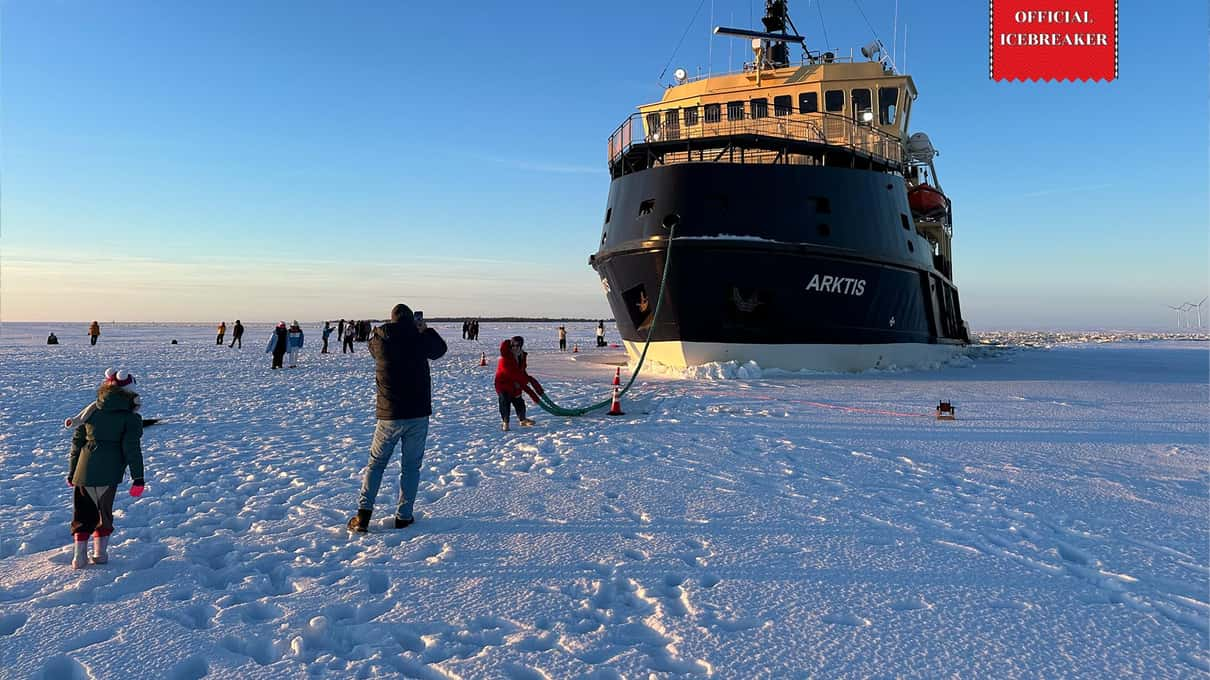
Arktis, a 3-hour cruise from Kemi
The shortest of the three cruises, so less time in the cold if that worries you. Two warm indoor decks and a modern café, 4.4 from 220+ reviews on GetYourGuide. Meals and the SnowCastle exhibitions cost extra.
Dressing for the survival suit
For ice floating you pull a thick waterproof survival suit over your clothes. You need to be able to bend and sit in it, so a slimmer warm layer underneath works better than a vast parka.
The suit keeps you dry from the sea, but it can be damp inside from the guests before you. Pack a dry change of clothes (at least socks and a base layer) and leave it somewhere warm on board.
Floating is never certain, any more than the walk on the ice is, so it may not happen on your day. Our guide to ice floating explains the suit and the water, plus the rules on who may go in.
Phones and cameras in the cold
Cold drains phone batteries fast, and a phone at full charge can shut down after a while on deck. Keep it in an inside pocket close to your body, and take it out only for the shot.
A small power bank in the same warm pocket helps on a long day. Camera batteries behave the same way. Carry a spare and swap them rather than waiting for the first to recover.
Phones stay behind when you float, so pictures of you in the water come from the ship's photographer as a paid service. What a Kemi icebreaker cruise costs includes that among the extras to budget for.
Adjusting for the month and the weather
January brings the coldest weeks and short days, so lean towards more layers and a warmer hat. By March and April the air is milder but the glare is stronger, and sunglasses become as useful as gloves.
Wind changes everything on the open ice. A calm day at −15 °C (5 °F) can feel easier than a windy one at −5 °C (23 °F); the season month by month and what happens when the wind is up explain the ice side of it.
Dressing children and the Sweden trip
Children lose heat faster than adults and complain about it later than they should. Dress them in the same layers, with mittens on a string, and bring them inside often; icebreaker cruises with kids has more on keeping a family day comfortable.
If you take the Swedish cruise from Axelsvik, the clothing advice is the same, but a passport goes in that inner pocket too. The guide to Polar Explorer and the drive to Axelsvik covers the border.
Plan to bring your own winter clothing, or buy it before you travel. Choosing a ship comes after that, and our ship comparison sets the three side by side.